safeledger logo

Power of Attorney Rules Under UAE Law: 2026 Update

Reading Time

9 min read

Power of Attorney Rules Under UAE Law: 2026 Update

Table of Contents

In the UAE, people often manage personal and business matters while living overseas or traveling for work. This can delay contract signing, property transactions, banking activities, and legal filings. Understanding the power of attorney rules in the UAE can help reduce delays.

A Power of Attorney (POA) authorizes a trusted representative (aka Agent) to perform specific actions for the principal (you). When drafted correctly, it keeps transactions on track. It also supports legal compliance and prevents operational disruptions when direct involvement is not possible. It is important to note that POA regulations in the UAE may get updated regularly, so staying informed keeps your documents valid.

This blog explains how Power of Attorney works under UAE law and why it is important for residents, expats, and investors. Moreover, it addresses both federal regulations and emirate-specific practices in Dubai and Abu Dhabi.

Essentially, a POA allows a person in the UAE to authorize another individual to act on their behalf. It applies to legal, financial, property, and business matters. Power of Attorney in the UAE is governed primarily by Federal Law No. 5 of 1985 (UAE Civil Transactions Law), as amended, along with relevant notary and judicial regulations. The document must follow the law of power of attorney in the UAE and meet all local legal requirements.

The principal must notarize the POA with a UAE Notary Public to make it legally valid. For international or cross-border use, authorities may require the principal to obtain attestation from the Ministry of Foreign Affairs (MOFA).

A Power of Attorney clearly sets out the authority given to the agent. It allows the agent to take lawful action for the principal without transferring ownership or personal rights. The document is prepared in Arabic or a bilingual format. It can be general, special, or purpose-specific. However, the principal can revoke it at any time, unless the law provides otherwise.

Legal Requirements for a Valid Power of Attorney in the UAE

A Power of Attorney in the UAE must follow strict rules and regulations to be legally recognized and enforceable. Certain types of POAs usually require registration, especially those related to property transactions, corporate matters, or government and regulatory filings. Principals must register these with the Abu Dhabi Judicial Department (ADJD) to ensure full legal validity and acceptance by authorities.

Below are the key legal requirements for a valid POA in the UAE:

  1. Drafting Requirements: A POA must be a written document; oral agreements are not valid. Specifically, the principal and agent must be clearly identified, with all full names and identification details provided.

The powers granted should be specific and detailed. Vague or open-ended wording can lead to rejection by banks, courts, or government authorities.

  1. Language Requirements: POAs must be drafted in Arabic or a bilingual format with a certified translation. In case of disputes, the Arabic version prevails. Clear and precise language ensures smooth processing by UAE authorities and financial institutions.
  2. Notarization and Attestation: The principal must sign the POA in front of a UAE Notary Public. POAs issued abroad require notarization in the home country, attestation by the Ministry of Foreign Affairs, and legalization by the UAE embassy. Some emirates, like Dubai, offer online notarization for POA for a faster, more convenient process. Proper notarization and attestation ensure recognition by banks, courts, and government departments.
  3. Registration Requirements: Certain POAs (property, business, or government-related) must be registered with the Ministry of Justice, Dubai Land Department, or the relevant authority based on the POA type.

Registered POAs carry higher legal weight.

  1. Eligibility of Principal and Agent: The principal and agent must meet age and mental capacity requirements. Identification documents, such as a passport or Emirates ID, are mandatory. Minors or persons lacking legal capacity cannot grant a POA or act as agents. Agents can be UAE residents or foreigners with valid identification.
  2. Mandatory Content: A valid POA must include the scope of authority, duration, agent details, revocation terms, and governing law. Clear documentation prevents misuse and ensures compliance with UAE power of attorney rules and regulations.
  3. Duration and Termination: The POA should specify a validity period. If no duration is mentioned, it remains valid until revocation or the principal’s death. A POA automatically terminates upon expiry, revocation, or death.
  4. Revocation Procedure: The principal can revoke the POA at any time. Revocation must be notarized and communicated to banks, authorities, or third parties. This ensures the agent cannot continue acting after revocation.
  5. Scope Limitations: Certain powers cannot be delegated under UAE law. These include creating or revoking a will, inheritance decisions, or personal legal matters. Clearly defining limits prevents legal disputes. POAs cannot authorize criminal acts or violate Sharia law provisions.
  6. Special Rules for Gifts: POAs authorizing gifts must comply with the power of attorney gifting rules. The principal must explicitly allow the agent to transfer assets or make gifts. Documenting the value of assets and beneficiaries ensures enforceability. Ambiguous wording can invalidate the transaction.
  7. Cross-Border Recognition: POAs intended for use outside the UAE may require an apostille or legalization, depending on the country. Countries not part of the Hague Apostille Convention require embassy legalization. Proper legalization ensures acceptance by foreign authorities.
  8. Dubai and Abu Dhabi Nuances: Dubai offers online notarization through Smart Notary. Abu Dhabi requires verification through the Abu Dhabi Judicial Department. These local procedures complement federal law and ensure your POA is valid in all emirates.
  9. Inheritance POA Limitations: Inheritance POA cannot authorize actions that conflict with Sharia law or UAE inheritance rules. They must clearly specify authority over estate matters to prevent misuse.

Following these rules ensures your Power of Attorney is fully valid and secure across the UAE. It also gives you peace of mind in every transaction.

This keeps all actions legally valid and protects the principal’s interests. Most individuals in businesses alike draft a General Power of Attorney in the UAE for most cases. 

Dubai POA Rules and Procedures: Notarization, Property, and Legal Compliance

Dubai follows federal POA rules and regulations, but it also has local procedures to make POA issuance and recognition faster. Understanding these Dubai-specific requirements ensures your POA is accepted by authorities, banks, and the Dubai Land Department (DLD) without delays.

Here are the key points for POAs in Dubai:

  1. Dubai Courts Smart Notary: Online submission with scheduled notarization at Dubai Courts; faster than traditional notarization.
  2. Required Documents: Principal’s passport and Emirates ID; agent’s passport and Emirates ID; proof of relationship or corporate authorization if applicable.
  3. Clear Authority: POA must explicitly state granted powers; vague or open-ended wording is not accepted for property, banking, business, or regulatory matters.
  4. Property Transactions: DLD requires explicit authority to sign contracts and handle payments; POA should state transaction limits and accepted, traceable payment methods.
  5. Operational Limits: Certain matters (healthcare decisions, inheritance, wills) cannot be delegated; POA must define inclusions and exclusions clearly.
  6. Fees & Processing: Fees vary by POA type and scope; Smart Notary reduces processing time; additional verification documents may be requested.
  7. Revocation & Amendments: Any change or revocation must be re-notarized; banks, DLD, and relevant parties must be notified immediately.
  8. Recognition: Banks, DLD, free zones, and courts accept a notarized Dubai POA when it is properly drafted.
  9. Case Law: Dubai courts rely on federal POA precedents; clear drafting and proper notarization reduce disputes.
  10. Litigation POA Verification: Abu Dhabi Judicial Department (ADJD) strictly verifies Litigation POA before allowing court representation. Registration and authentication are essential to prevent misuse and ensure enforceability in legal proceedings.

Ensure your Power of Attorney is valid and fully secure. SafeLedger can handle drafting, notarization, and attestation, helping your company operate smoothly and without delays. Contact us today!

Abu Dhabi POA Rules and Best Practices: Notarization, Registration, and Legal Guidance

Abu Dhabi follows federal rules regarding power of attorney (POA), but also has specific local procedures. Knowing these ensures your POA is valid, enforceable, and recognized by authorities.

Abu Dhabi-specific rules focus on notarization, registration, verification, and the scope of authority. Here’s what you need to know:

Notarization via Abu Dhabi Judicial Department (ADJD): POAs must be notarized through ADJD. Principals must appear in person or follow approved corporate procedures. Documents must be in Arabic or a bilingual format, and authorities require certified translations for foreign documents.

Clear and Specific Authority: Authorities require the POA to clearly state the powers granted. Vague or open-ended wording is not accepted. This is crucial for property transactions, banking, corporate filings, and regulatory matters. Explicitly listing powers reduces the risk of disputes and rejection.

  1. Registration Requirements: ADJD requires registration of certain POAs, especially those related to property or corporate matters. Registration ensures the POA is legally recognized and usable without conflicts or objections from third parties.
  2. Verification of Authenticity: ADJD provides a system to verify notarized POAs. Banks, government entities, and other third parties can confirm the POA’s validity. Always verify authenticity before using it for important or high-value matters.
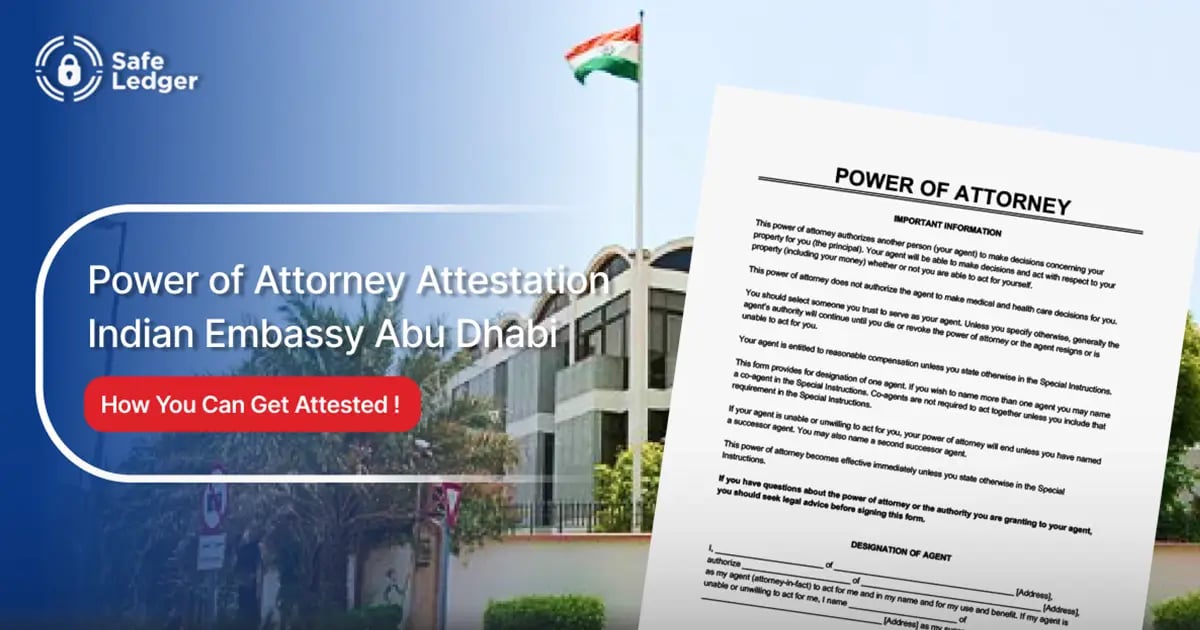
  3. Foreign POA Acceptance: The principal must notarize POAs abroad, get them attested by the Ministry of Foreign Affairs, and legalize them at the UAE embassy. Completing these steps ensures recognition by Abu Dhabi authorities, banks, and courts.
  4. Revocation and Updates: Any revocation or amendment must be notarized through ADJD. Third parties must be notified promptly to prevent unauthorized use and ensure legal clarity.
  5. Case Laws on Power of Attorney: Abu Dhabi courts refer to case laws on POAs to resolve disputes. Clear drafting, specific powers, and proper notarization help minimize legal risks and protect both the principal and the agent.

Follow Abu Dhabi’s POA rules and lasting power of attorney requirements to keep your corporate and personal affairs secure and compliant.

POA Limitations and Legal Boundaries in the UAE

A Power of Attorney (POA) in the UAE is a strong legal tool but comes with clear limits. UAE-specific rules focus on scope, authority, termination, witnessing, and cross-border use. Here’s what you need to know:

  1. Scope Limitations: Some powers cannot be delegated, including making or revoking a will, inheritance matters, and personal legal decisions. The principal should clearly define the agent’s authority to prevent disputes.
  2. Specificity Matters: Only grant powers necessary for the task. Banks, courts, or authorities may reject vague or general wording. Clear and precise language protects both the principal and agent.
  3. Automatic Termination: A POA ends if the principal dies, becomes mentally incapacitated (unless it is a lasting POA), or when the term expires. Revocation by the principal also terminates the POA.
  4. LPA Witness Rules: For lasting powers of attorney, witnesses may confirm the principal’s mental capacity and voluntary consent. Proper witnessing ensures compliance and prevents legal challenges.
  5. Misuse and Legal Consequences: Agents acting beyond their authority may face fraud, breach of trust, or damages claims. Authorities refer to POA case laws to resolve disputes. Exceeding the POA’s scope can nullify transactions and expose third parties to liability.
  6. Financial and Property Limits: POAs for property, corporate, or banking matters must follow UAE-specific rules. Authorities may require explicit clauses for signing contracts, issuing cheques, or transferring funds.
  7. Cross-Border Limitations: International POAs must follow attestation and legalization rules. Ignoring these steps can invalidate foreign transactions and create legal issues.
  8. Third-Party Reliance: Banks, government departments, and courts process only clearly drafted and notarized POAs. Misrepresentation or ambiguity may lead to rejection, delays, or legal disputes.

By following UAE POA rules and LPA witness requirements, you ensure your POA is legally valid and prevent cross-border issues

With proper notarization and expert guidance, SafeLedger minimizes legal risks and prevents disputes. This ensures all your transactions remain secure and fully enforceable.

Frequently Asked Questions


1. Can I notarize a POA online in the UAE?

Yes, you can notarize a POA online in the UAE through digital or e-notarization services that verify your identity over a video call with a UAE notary. Authorities accept digitally notarized POAs like physical ones when properly executed and registered. This option allows expatriates and international principals to issue POAs without visiting a notary in person.

2. Does a UAE POA work across all seven emirates?

Yes, a properly drafted and notarized POA is valid across all seven emirates in the UAE. Whether you execute it in Dubai, Abu Dhabi, or another emirate, authorities recognize it nationwide for banking, property, business filings, or legal matters. For certain transactions, you may need to register the POA with the relevant local department.

3. What age must the principal and agent be under UAE law?

Under UAE law, both the principal and the appointed agent must be at least 21 years old and mentally capable of understanding the POA’s scope. Authorities, banks, and courts typically refuse POAs issued by minors or to agents who do not meet age and capacity requirements, ensuring the delegated authority is legally enforceable and valid.

4. Does a UAE POA automatically expire?

A UAE POA does not automatically expire unless the document specifies an expiry date or condition. If no date is mentioned, it remains valid until the principal revokes it or passes away. For property or business transactions, authorities may recommend periodic renewal or review to ensure the POA remains up to date and fully compliant with current laws.

5. Can I appoint more than one agent under a POA in the UAE?

Yes, you can appoint multiple agents under a UAE POA. The document must clearly state whether agents act jointly (together) or severally (individually). Clearly defining responsibilities and limits prevents confusion, ensures proper use, and helps banks, courts, or government authorities understand how your agents may act on your behalf.

6. Can my POA include selling more than one property?

Yes, a POA can authorize selling multiple properties, but you must list each property explicitly, including plot or unit numbers. General wording for multiple sales is often rejected. Detailed drafting ensures the agent has legal authority for each transaction and helps the Dubai Land Department or other authorities process sales without delays or disputes.

7. Can a POA be used after the principal’s death?

No, a standard POA generally becomes invalid when the principal dies. After death, legal authority passes to heirs or estate representatives under UAE inheritance laws. Executors must submit proof of succession before acting on behalf of the estate. Attempting to use an existing POA after death can create legal disputes. Only certain enduring or lasting powers of attorney remain effective, and these are strictly regulated.

8. Can a POA be used for court representation in the UAE?

Yes, a POA can authorize an agent to represent the principal in UAE courts, but it must explicitly grant litigation authority. Courts require precise wording and proper notarization to accept the agent as a legal representative. Missing these elements may lead to refusal or delays in proceedings, so clarity in drafting is essential.

9. Do I need to notify third parties after revoking a POA?

Yes, after revoking a POA in the UAE, you must notarize the revocation and notify banks, government entities, and any third parties relying on the old POA. Prompt communication ensures the former agent cannot continue acting, protecting your assets and legal rights from unauthorized or fraudulent actions.

10. Can a POA holder receive funds on my behalf in the UAE?

A POA holder cannot receive sale proceeds in their own name unless the POA explicitly grants that authority. For example, proceeds from property sales must usually be paid directly to the principal’s account or name. Clear and specific drafting prevents misuse, ensures compliance with banking regulations, and protects the principal’s financial interests.

11. Is online POA notarization legal in Dubai?

Yes, online POA notarization is legal in Dubai. The Dubai Courts’ Smart Notary system allows principals to complete notarization digitally. Properly executed online POAs are recognized by banks, courts, and government departments. The system ensures identity verification and compliance with UAE regulations. Digital notarization provides a faster, convenient option for expats and business owners managing legal or financial matters remotely.

12. Is a Power of Attorney valid if the principal leaves the UAE?

Yes, a UAE POA remains valid even if the principal leaves the country. As long as it is properly notarized and, if required, registered, the agent can act on the principal’s behalf. This allows expatriates and overseas investors to manage UAE-related legal, financial, and property matters remotely. The POA ensures continuity and operational efficiency without requiring the principal’s physical presence.

13. How long does POA notarization take in UAE?

Notarization time varies depending on the POA type and emirate. In-person notarization usually takes one to three business days if all documents are complete. Online notarization in Dubai via Smart Notary can often be completed within a single day. Processing time depends on verification of identity, document completeness, and registration requirements. Planning ahead ensures timely execution for urgent legal, corporate, or property matters.

Just Drop Your Info Below We’ll Get In Touch With You

Joel Dsouza

About the Author

Joel Dsouza

Joel Dsouza is a Chartered Accountant and compliance specialist with extensive experience advising over 1,000 startups and SMEs on company registration, tax structuring, and regulatory compliance. As a member of ICAI and Co-Founder of Safe Ledger, Joel combines his deep financial expertise with a global perspective to help entrepreneurs navigate complex business environments. Focused on the UAE market, he is dedicated to empowering international and local business owners with clear, practical guidance on company setup, tax optimization, and ongoing compliance making him a trusted advisor for businesses aiming to succeed in the dynamic UAE economy.

Related Posts

View All

Don't miss our daily updates

Stay updated with the latest news, tips, and exclusive offers. Subscribe to our newsletter!

WhatsApp Icon