safeledger logo

Power of Attorney in Dubai Via Indian Consulate

Reading Time

7 min read

Power of Attorney in Dubai Via Indian Consulate

Table of Contents

Dubai is home to a large Indian expatriate community that often needs to manage property, banking, business, and legal matters. Power of Attorney in Dubai through the Indian Consulate provides a legally recognized way for Indians in the UAE to do just that. The Principal can authorize a trusted person, aka Agent, to act on their behalf.

From property transactions to court representation, a properly attested Power of Attorney (PoA) ensures continuity and legal validity across borders.

The Indian Consulate must attest a PoA signed in Dubai to grant it legal acceptance in the UAE. Banks, courts, and government offices use this attestation to verify identity and intent, helping NRIs avoid delays, repeated travel, and legal complications.

This blog guides you through the process, requirements, and key considerations for executing a Power of Attorney through the Indian Consulate in Dubai.

What is a Power of Attorney, and What Role Does Indian Consulate Play?

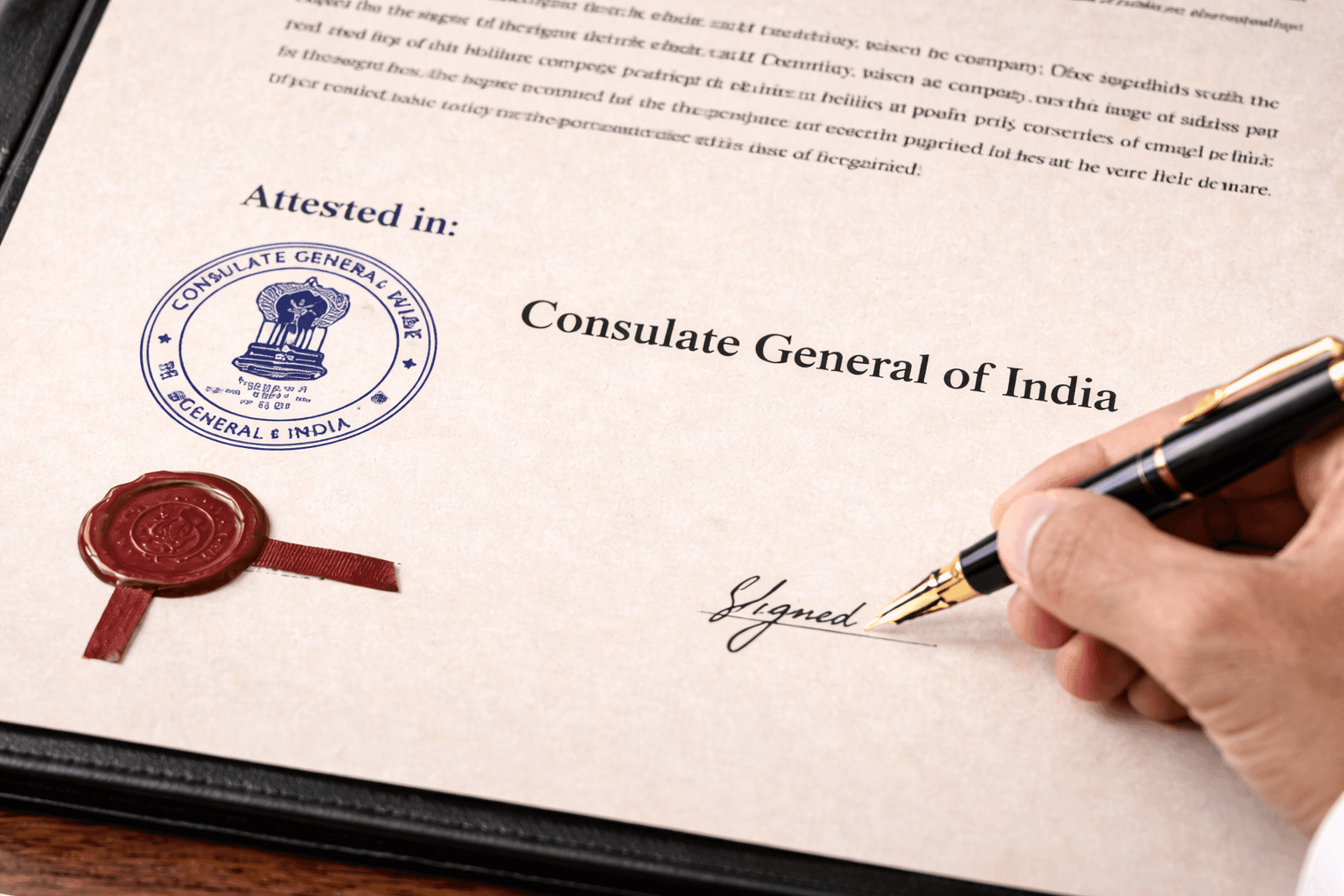
A Power of Attorney (PoA) in the UAE is a legal document that allows one person to authorize another to act on their behalf. Indians living in Dubai must have the Consulate General of India (CGI), Dubai, attest a PoA signed outside India to make it legally valid

The Consulate verifies the Principal’s identity and witnesses the signature. Once the Consulate attests the PoA and stamps it, the Attorney can legally act within the powers specified in the document.

For more information, refer to our detailed guide on “What is a Power of Attorney”.

Role of the Indian Consulate in Dubai

The Consulate General of India (CGI), Dubai, helps Indian citizens in the UAE authenticate PoAs and ensures they comply with UAE law. Key functions of the Indian consulate for POA in Dubai include:

  • Identity Verification: Confirms the Principal’s identity using passport and UAE residency proof.
  • Witnessing Signatures: Ensures the PoA is signed voluntarily in the presence of a Consular Officer.
  • Consular Attestation: Provides official certification for legal use.
  • Jurisdiction Management: Handles applications from Dubai and the Northern Emirates, coordinating with SGIVS centers for appointments, document submission, and fees.

Through these functions, CGI Dubai allows Indian citizens to safely and legally authorize representatives.

Note: While the SGIVS acts as the authorized service provider for document intake, the Indian Consulate performs the actual attestation.

For business-related PoAs in Dubai, read our blog on “Which Court Makes Power of Attorney in Dubai for Business”.

Types of Power of Attorney for Indians in Dubai

Indians in Dubai can use different types of PoA depending on the purpose and level of authority. Common types include:

Type of Power of Attorney Purpose and Scope
General Power of Attorney (GPA) Grants broad authority to manage multiple personal and administrative matters. Many Indians in Dubai choose to draft a general PoA in the UAE to simplify ongoing tasks.
Special Power of Attorney (SPA) Authorizes a specific act or transaction, commonly used for property sales or representation before banks or government departments.
Property Power of Attorney Applies to a specific immovable property and limits authority to actions like registration or sale.
Personal Power of Attorney Personal PoA handles personal matters such as operating bank accounts and managing utilities or services.
Financial Power of Attorney Allows the Attorney to manage financial matters, including investments and loans.
Business Power of Attorney Enables a representative to manage business operations, execute contracts, and handle compliance or regulatory filings.
Vehicle Power of Attorney A Vehicle POA authorizes the sale, transfer, registration, or management of a motor vehicle.
Court Case Power of Attorney Allows representation in a specific ongoing court case, including filing documents and appearing before the court.
Litigation Power of Attorney A Litigation POA handles multiple lawsuits, legal claims, or dispute resolution matters.
Police Clearance Power of Attorney Permits a representative to apply for and collect Police Clearance Certificates and related verification documents.
Limited Power of Attorney Restricts authority by scope or time and is suitable for one-time or short-term actions.

The different types of power of attorney in the UAE serve various purposes, so you must choose the right one carefully.

To learn how to revoke or cancel a PoA executed in Dubai, read: How to Cancel a Power of Attorney in Dubai?

How to Attest Power of Attorney via the Indian Consulate, Dubai?

Getting a PoA attested at the Indian Consulate in Dubai involves a clear set of steps. These include:

  1. Draft the PoA: Prepare the PoA in the UAE in accordance with Indian legal requirements. Ensure it clearly specifies the powers granted and is signed by the Principal.
  2. Verify Document Requirements: Gather all necessary documents, including:
    1. Principal’s passport
    2. UAE residence visa or Emirates ID
    3. A copy of the Attorney’s passport in India
    4. Proof of address (if applicable)

The authorities may require additional documents for some PoAs depending on their purpose.

  1. Book an Appointment: Schedule an appointment online through the designated SGIVS portal or consular service provider. Walk-in applicants are generally not accepted and may face delays.
  2. Submit Documents in Person: Visit the Consulate or SGIVS center on the appointment date. The Principal must appear in person and sign the PoA in front of a Consular Officer or authorized official.
  3. Pay Consular Fees: Pay the applicable consular attestation fees, ranging from AED 80 to AED 200, at the center or online, as instructed during the booking process.
  4. Verification and Attestation: The Consulate verifies the Principal’s identity, confirms the signature, and then officially attests the PoA.
  5. Receive Attested PoA: Collect the attested PoA from the Consulate or SGIVS center. The document is now ready to be sent to India for further stamping or registration if required.

The Power of Attorney attestation in Dubai via the Indian consulate typically takes 2–5 working days. Some SGIVS centers also offer faster processing for an extra service charge.

Note: The validity of a PoA in the UAE depends on the type of PoA and the terms specified in the document.

For more details on PoA validity, read our blog on “Does a Power of Attorney Expire“.

Stamp Duty and Registration of Power of Attorney in India

After the Indian Consulate attests a PoA in Dubai, the Principal must pay stamp duty and register it in India (if required) to make it fully enforceable.

  • Stamp Duty: PoAs must be stamped as per the Stamp Act of the Indian state where they will be used. Rates vary by type of PoA and state.
  • Registration: Property-related PoAs must be registered at the local Sub-Registrar’s office. Other PoAs can be optionally registered for added legal security.
  • Legal Validity: The PoA gains full legal validity only after the Consulate attests it, the Principal pays stamp duty, and the registration (if required) is completed. This allows the Attorney to act within the powers granted.

These steps ensure a PoA executed in Dubai via the Indian Consulate is recognized and enforceable for property, banking, legal, or business matters.

Need help with your Power of Attorney in Dubai? SafeLedger helps Indians in Dubai handle the entire PoA process smoothly, from drafting to registration. Get expert guidance to ensure your PoA is legally valid and seamless. Contact us today!

Common Mistakes to Avoid While Executing PoA in Dubai

Executing a PoA in Dubai requires careful attention to legal and procedural details. Avoiding the following common errors helps ensure the document is valid and accepted:

  • Incorrect Type of PoA: Choosing the wrong type, general, special, or property-specific, can lead to rejection or legal issues.
  • Incomplete or Incorrect Details: Missing information, unclear powers, or incorrect personal details of the Principal or Attorney can invalidate the PoA.
  • Not Signing in the Presence of a Consular Officer: The Principal must sign the PoA in person before the Indian Consulate or authorized SGIVS official. If the Principal signs elsewhere, authorities may reject the PoA.
  • Skipping Consular Attestation: Authorities do not recognize a PoA signed in Dubai without consular attestation as legally valid.
  • Ignoring Stamp Duty and Registration: If the Principal fails to pay stamp duty or register the PoA, it becomes unenforceable.
  • Using Outdated or Incorrect Templates: If individuals use PoA formats that do not align with the legal requirements, authorities may delay or refuse the attestation.

Avoiding mistakes while executing a PoA via the Indian consulate in Dubai can be tricky. SafeLedger guides you through the entire process and ensures that your document is accurate and legally valid. Fill the form to get started.

For insights on the difference between a power of attorney and a will, read our detailed blog.

Frequently Asked Questions


1. What is a Power of Attorney in Dubai through the Indian Consulate?

A Power of Attorney in Dubai through the Indian Consulate is a legal document that allows an Indian citizen residing in the UAE to authorize another person to act on their behalf for specific matters. The Indian Consulate attests the PoA to verify the Principal’s identity and intent. This attestation enables UAE banks, courts, and government authorities to accept the document without legal disputes.

2. Who can execute a Power of Attorney at the Indian Consulate in Dubai?

Any Indian citizen legally residing in Dubai or the Northern Emirates can execute a Power of Attorney at the Indian Consulate. The Principal must personally visit the Consulate or an authorized SGIVS centre. They must sign the PoA in front of a Consular Officer or authorized official, which confirms identity, consent, and voluntary execution.

3. How long does it take to get a Power of Attorney attested through the Indian Consulate in Dubai?

The Indian Consulate in Dubai usually completes Power of Attorney attestation within 2–5 working days. Processing time depends on document accuracy, appointment availability, and application volume. Applicants who submit complete documents and select the correct type of PoA often avoid delays. Some SGIVS centres also offer faster processing for an additional service charge.

4. What are the common types of Power of Attorney used by Indians in Dubai?

Indians in Dubai commonly use General, Special, Property, Personal, Financial, Business, Vehicle, Court Case, Litigation, Police Clearance, and Limited Powers of Attorney. Each type serves a specific legal or administrative purpose. Selecting the correct PoA ensures acceptance by UAE authorities and prevents misuse, rejection, or legal complications during banking, property, or legal transactions.

5. What documents are required for Power of Attorney attestation via the Indian Consulate in Dubai?

Applicants must submit the Principal’s valid Indian passport, UAE residence visa, or Emirates ID, and the drafted Power of Attorney for POA attestation through the Indian consulate. Some cases also require a copy of the Attorney’s passport or supporting documents related to property, business, or court matters. Providing complete and accurate documents helps the Consulate process the attestation without delays.

6. Is personal appearance mandatory for PoA attestation at the Indian Consulate in Dubai?

Yes, the Indian Consulate requires the Principal’s personal appearance for PoA attestation. The Principal must sign the document in front of a Consular Officer or authorized SGIVS official. This step verifies identity and ensures voluntary authorization. The Attorney does not need to attend the attestation appointment, as the Consulate focuses only on the Principal.

7. How much does it cost to get a Power of Attorney attested by the Indian Consulate in Dubai?

The Indian Consulate typically charges around AED 80–95 for personal Powers of Attorney and approximately AED 190–202 for commercial or business Powers of Attorney. These fees include consular charges and standard SGIVS service costs. Applicants may pay additional fees for optional services such as courier delivery or expedited processing.

8. How long is a Power of Attorney valid in the UAE?

A Power of Attorney remains valid in the UAE based on the terms mentioned in the document. The PoA continues until the Principal revokes it or until the expiry date stated in the document. UAE authorities accept only properly attested PoAs, and some institutions may also check whether the powers remain relevant and legally enforceable.

9. Do I need to pay stamp duty or register my PoA after consular attestation?

For use within the UAE, authorities generally do not require Indian stamp duty or registration after consular attestation. However, certain banks or government bodies may request additional notarization or local verification depending on the transaction. Applicants should always confirm specific requirements with the concerned authority before relying on the PoA.

10. Can a Power of Attorney attested by the Indian Consulate be used for banking and property matters in the UAE?

Yes, a Power of Attorney attested by the Indian Consulate can support banking, property, legal, and business matters in the UAE. The appointed Attorney can act only within the powers mentioned in the document. Banks and property authorities may also impose additional compliance checks before acceptance.

11. How does SafeLedger help Indians get a Power of Attorney attested in Dubai?

SafeLedger supports Indians in Dubai by managing the entire Power of Attorney process. The team helps clients choose the correct PoA type, drafts and reviews documents, schedules SGIVS or Consulate appointments, and ensures accurate submission. This end-to-end guidance minimizes errors, saves time, and ensures smooth acceptance by UAE authorities.

12. Can I give Power of Attorney in Dubai without visiting India?

Yes, you can execute a Power of Attorney in Dubai without visiting India. You draft the PoA in the UAE, appear in person before the Indian Consulate or an authorized SGIVS official for attestation, and submit it. Once attested, the Attorney can act on your behalf within the powers specified, and the PoA gains legal recognition in the UAE.

13. Is SGIVS mandatory for PoA attestation?

No, SGIVS is not mandatory for PoA attestation. It serves as an authorized partner of the Indian Consulate to simplify appointments, document submission, and fee payments. Applicants can submit documents directly to the Consulate. Using SGIVS can save time and reduce errors, but all attested PoAs are legally valid regardless of SGIVS involvement.

Just Drop Your Info Below We’ll Get In Touch With You

Joel Dsouza

About the Author

Joel Dsouza

Joel Dsouza is a Chartered Accountant and compliance specialist with extensive experience advising over 1,000 startups and SMEs on company registration, tax structuring, and regulatory compliance. As a member of ICAI and Co-Founder of Safe Ledger, Joel combines his deep financial expertise with a global perspective to help entrepreneurs navigate complex business environments. Focused on the UAE market, he is dedicated to empowering international and local business owners with clear, practical guidance on company setup, tax optimization, and ongoing compliance making him a trusted advisor for businesses aiming to succeed in the dynamic UAE economy.

Related Posts

View All

Don't miss our daily updates

Stay updated with the latest news, tips, and exclusive offers. Subscribe to our newsletter!

WhatsApp Icon