safeledger logo
Business Setup

How to Start a Business in Dubai as a Foreigner?

Reading Time7 min read
How to Start a Business in Dubai as a Foreigner?
Table of Contents

The UAE’s modern commercial laws and foreign investment framework allows foreigner to easily start a business in Dubai. These regulations simplify market entry and allow international entrepreneurs to operate legally with fewer restrictions. Foreign investors can establish companies in Dubai under mainland or free zone jurisdictions with 100% ownership for most business activities.

The Department of Economy and Tourism (DET) regulates company formation and licensing for mainland businesses. In contrast, individual free zone authorities (like Dubai Multi Commodities Centre (DMCC) manage incorporation and compliance within their respective zones. These authorities issue business licenses and handle renewals & regulatory approvals.

As a result, they ensure a transparent and standardized business setup process for foreign investors. This blog explains how foreigners can start a business in Dubai, including legal requirements, registration steps, and jurisdiction options.

Why a Foreigner Should Start a Business in Dubai? Benefits and Legal Framework

Dubai combines a business-friendly regulatory system with strong economic growth and operational stability.

Foreigners choose Dubai for several key reasons:

  • Full Foreign Ownership: Investors can fully own mainland and free zone companies, eliminating the need for a local sponsor.
  • Tax-Efficient Environment: No personal income tax; corporate tax is 9% only on profits above AED 375,000.
  • Strategic Global Location: Easy access to markets across the Middle East, Africa, Europe, and Asia for trade and expansion.
  • Advanced Infrastructure: Modern transport, digital, and logistics systems streamline operations and supply chains.
  • Investor Protection & Support: Strong legal framework enforces contracts, and authorities manage licensing, renewals, and compliance.
  • Profit & Capital Repatriation: Entrepreneurs can freely transfer profits and capital outside the UAE, lowering financial risks and boosting investor confidence.
  • Legal Framework: The Commercial Companies Law (CCL) allows full 100% foreign ownership for most sectors; the FDI Policy identifies sectors needing special approval.
  • Licensing & Compliance: The Department of Economy and Tourism (DET) handles mainland companies, while free zone authorities manage their zones. Business activity determines license type, office requirements, and compliance obligations.
  • Tax & Regulatory Compliance: Companies adhere to corporate tax, Economic Substance Regulations (ESR), and anti-money laundering standards.
  • Visa & Immigration Rules: Investors and partners can apply for visa services after registration, based on company structure, ownership, and office space.

Dubai’s ownership, tax, and legal advantages make it ideal for foreign entrepreneurs to start and grow their businesses.

Documents Required for Foreigners to Start a Business in Dubai

Starting a business in Dubai as a foreign national requires submitting specific documents to verify identity, business intent, and legal compliance.

To understand what paperwork you need to prepare, review the essential document categories below:

  • Passport copies of all shareholders and directors
  • Recent passport-size photographs
  • Visa copy or entry stamp (if applicable)
  • Proof of residential address
  • Business plan or activity description
  • Proposed company name options
  • Memorandum of Association (MOA)
  • Articles of Association (AOA)
  • Board resolution (for corporate shareholders)
  • No Objection Certificate (NOC), if required
  • Lease agreement or office address proof
  • Initial approval certificate
  • Trade name reservation certificate

Having these documents ready in advance simplifies the setup process and helps you move forward with confidence.

How Can Foreigners Start a Business in Dubai? Step-by-Step Process

The UAE government has simplified business setup procedures while maintaining compliance with Dubai rules for foreigners and commercial regulations.

To see how this works in practice, here are the key steps foreign investors must follow to legally register and operate a business in Dubai:

Step 1: Choose the Business Activity

  • Select an activity approved by the licensing authority.
  • Match the activity with your business model and target market.

Check whether the activity requires special government or external approvals.

For reference, here is a list of business activities in Dubai, including Trading, Consulting, IT Services, Tourism Services, etc., to check out.

Step 2: Select the Jurisdiction

Choose between Mainland or Free Zone Business Setup.

  • Business setup in Dubai Mainland allows direct trading within the UAE market and is ideal for entrepreneurs targeting local customers.
  • Business setup in Dubai Free Zone offers industry-specific benefits, simplified procedures, and 100% foreign ownership.

Step 3: Reserve the Trade Name

  • Apply for trade name approval with the relevant authority.
  • Follow UAE naming guidelines and restrictions.

Ensure the name reflects the chosen business activity.

Step 4: Obtain Initial Approval

Submit an application for government consent to start the business.

This approval confirms that authorities have no objection to your activity. It allows you to proceed with legal documentation.

Step 5: Prepare Legal Documents

  • Draft the Memorandum of Association (MOA) or relevant agreements.
  • Notarize documents as required by the authority.
  • Clearly define ownership structure and management roles.
  • Register Ultimate Beneficial Owner (UBO) details where applicable.

Step 6: Arrange Office Space

  • Lease a physical office or flexi-desk, based on jurisdiction rules.
  • Register the lease agreement with the Dubai Department of Economic Development (DED) if required.

Office space is mandatory for license issuance and visa eligibility.

Step 7: Apply for the Business License

  • Submit documents and fees to the relevant authority (DET for mainland, Free Zone Authority for free zones).
  • Obtain your trade license.

Your business is officially registered and can start operations.

Step 8: Apply for Visas

  • Apply for investor, partner, and employee visas.
  • Visa eligibility depends on office space and company structure.
  • Medical tests and Emirates ID registration are part of the process.

Step 9: Open a Corporate Bank Account

  • Choose a UAE bank that supports your business activity.
  • Submit company documents and shareholder details.
  • Complete KYC and compliance checks.

Bank approval may take 2 to 4 weeks.

Timeline: Business setup usually takes 7 to 15 working days, excluding bank account opening and external approvals.

SafeLedger handles licensing, documents, and compliance, helping foreigners start their Dubai business faster and error-free. Contact us today for expert guidance and end-to-end support.

Cost of Starting a Business in Dubai for Foreigners

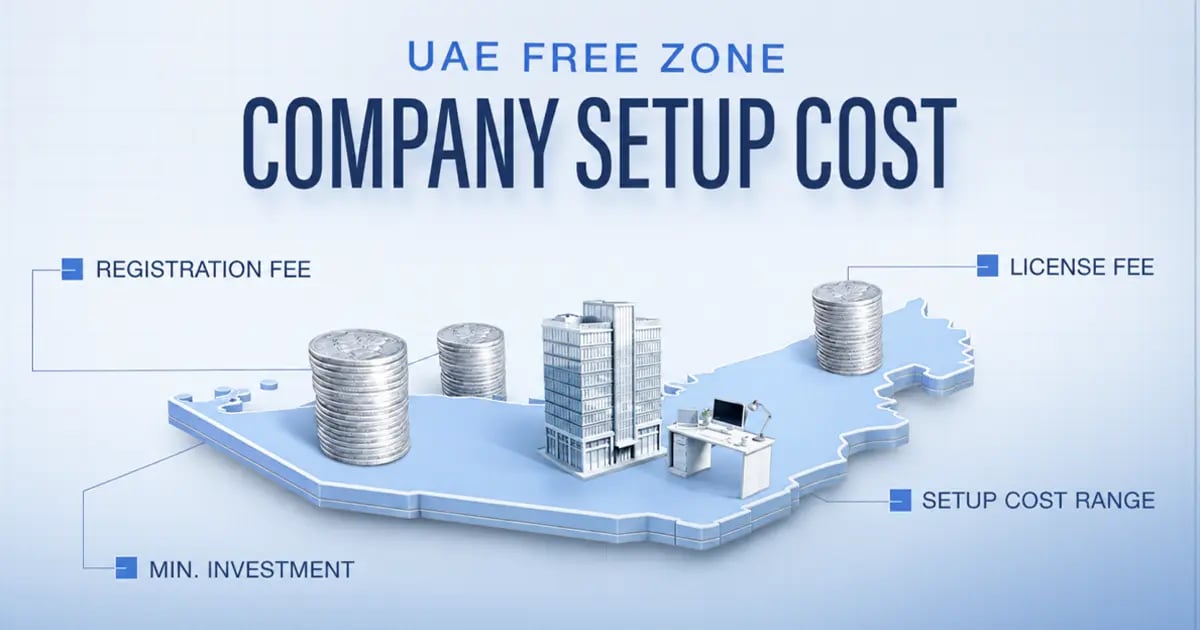
Starting a business in Dubai usually costs AED 15,000 to AED 50,000, depending on the license type, location, and visa needs.

To help you understand where this investment goes, here is a breakdown of the main cost components involved in company setup:

Cost ComponentEstimated Cost Range (AED)Purpose
Trade Name Registration 620 – 1,000 Reserving your company name
Initial Approval 120 – 500 Government approval for setup
Business License Fee 10,000 – 25,000 Commercial or professional license
Free Zone / Mainland Registration 5,000 – 20,000 Incorporation charges
Office Space / Flexi Desk 5,000 – 30,000 Mandatory business address
Visa Processing 3,500 – 7,000 per visa Investor or employee visa
Emirates ID Cost  300 – 400 National identity registration
MOA & Legal Documentation 1,500 – 5,000 Drafting and notarization
Bank Account Setup Support 1,000 – 3,000 Assistance with account opening
Annual Renewal & Compliance 5,000 – 15,000 License renewal and filings

Note: Final costs vary based on business activity, jurisdiction (mainland or free zone), number of visas, and office type selected.

Dubai Free Zone vs Mainland: Which is Better for Foreigners?

Mainland companies suit foreigners who want to trade directly in the UAE market. Business setup in Dubai Mainland provides access to local customers, government contracts, and a wider range of commercial activities. Free zone companies, on the other hand, are ideal for international business and have lower startup costs.

The table below compares Free Zone and Mainland companies based on key business factors:

FeatureFree Zone CompanyMainland Company
Ownership Foreign investors can own 100% of the company Foreigners can own 100% of most business activities, not all
Market Access Can operate within the free zone and conduct international business Can trade anywhere in the UAE and internationally
Licensing Authority Relevant Free Zone Authority Department of Economy and Tourism
Office Requirement Flexi-desk or shared office is usually accepted Physical office space is mandatory
Visa Eligibility Limited and package-based Higher visa quota based on office size
Customs Duty Exempt inside the free zone; applies when goods enter the mainland Subject to UAE customs regulations
Business Activities Limited to zone-approved activities Wider range of commercial and professional activities
Setup Cost Generally lower initial cost Higher due to the office and approvals
Annual Renewal Cost Lower and often bundled Higher due to rent and regulatory filings
Local Distribution Requires a local distributor to sell in the UAE No distributor required
Office Requirement Flexi-desk, shared office, or virtual office in Dubai is usually accepted Physical office space is mandatory

The best option depends on your target market, business activity, and long-term expansion plans.

Why Choose SafeLedger for Business Setup in Dubai?

SafeLedger provides complete support for foreigners to set up a business in Dubai with structured, compliant, and cost-efficient services.

  • Expert Regulatory Guidance: Reviews your business, documents, and ownership to ensure UAE compliance and reduce delays.
  • Customized Setup Strategy: Recommends the right jurisdiction, license, and visa based on goals and budget.
  • Faster Processing & Coordination: Manages approvals, documentation, and filings efficiently.
  • Clear and Predictable Pricing: Provides transparent cost estimates for licensing, visas, and office solutions.
  • Ongoing Compliance & Renewals: Supports license renewals, regulatory updates, and visa services after registration.

Over 5,000+ entrepreneurs rely on SafeLedger to set up their companies in Dubai faster, reduce legal risk, and achieve long-term operational stability.

Frequently Asked Questions

Yes, a foreigner can own 100% of a business in Dubai in most cases, especially when registering in a free zone or under mainland activities that allow full foreign ownership without a local sponsor. Recent reforms have expanded full ownership rights across many sectors, though a few strategic activities like banking or defense still require special approvals.

Dubai offers several types of business licenses depending on your activity, including commercial, professional, industrial, and tourism licenses. Each license lets you legally operate in different sectors and is issued by the relevant authority, mainland or free zone, which also determines the activities your company can conduct in the UAE.

The cost to start a business in Dubai as a foreigner typically ranges from around AED 15,000 to AED 50,000, depending on the jurisdiction, license type, office requirements, and visa processing fees. Free zone companies usually cost less, while mainland setups may have higher office and regulatory expenses.

Yes, most business setups in Dubai require office space, even ones by foreigners. Mainland companies must have a physical office, while free zones often allow flexi-desk or shared office solutions depending on the license package you choose. Having the right office proof is essential for visa eligibility and license issuance.

Yes, you can start and register a business in Dubai even if you do not live there. However, you usually need to visit the UAE at least once for bank account opening, visa biometrics, and other formalities, especially for mainland setups.

Yes, corporate tax in the UAE is applied at 9% on net profits exceeding AED 375,000, while profits below this threshold are typically tax-free. This makes Dubai an attractive but compliant destination for foreign entrepreneurs.

To start a business in Dubai, you need passport copies of shareholders and directors, trade name approval, business activity description, Memorandum of Association (MOA), lease agreement or office proof, initial approval, and other legal documents as required by the specific authority. Preparing these ahead of time helps avoid delays.

Yes, once your company is licensed and you have an appropriate office space, you can hire employees in Dubai and apply for employment visas for them, just like you would apply for your own investor or partner visa. Visa eligibility and quota depend on the business structure and office size.

Free zones are often better for foreign investors seeking full ownership, lower setup costs, and faster registration. Mainland companies are ideal if you want unrestricted access to UAE local markets and government contracts. The choice depends on your business goals and target audience.

Yes, foreign-owned companies in Dubai can open corporate bank accounts. Banks typically require a trade license, company documents, passport copies of shareholders, proof of business activities, and sometimes a minimum deposit. Requirements vary by bank.

Yes, many business activities in Dubai allow full foreign ownership without a local sponsor, especially in free zones. Mainland reforms also permit 100% foreign ownership in most sectors, though certain restricted activities still require a UAE national partner or approval.

Just Drop Your Info Below We’ll Get In Touch With You

Joel Dsouza

About the Author

Joel Dsouza

Joel Dsouza is a Chartered Accountant and compliance specialist with extensive experience advising over 1,000 startups and SMEs on company registration, tax structuring, and regulatory compliance. As a member of ICAI and Co-Founder of Safe Ledger, Joel combines his deep financial expertise with a global perspective to help entrepreneurs navigate complex business environments. Focused on the UAE market, he is dedicated to empowering international and local business owners with clear, practical guidance on company setup, tax optimization, and ongoing compliance making him a trusted advisor for businesses aiming to succeed in the dynamic UAE economy.

Related Posts

View All
WhatsApp Icon